Identify the material and incompatibilities
Current safety data sheets and inventory quantities establish what may need separation, ventilation, temperature control or special construction.
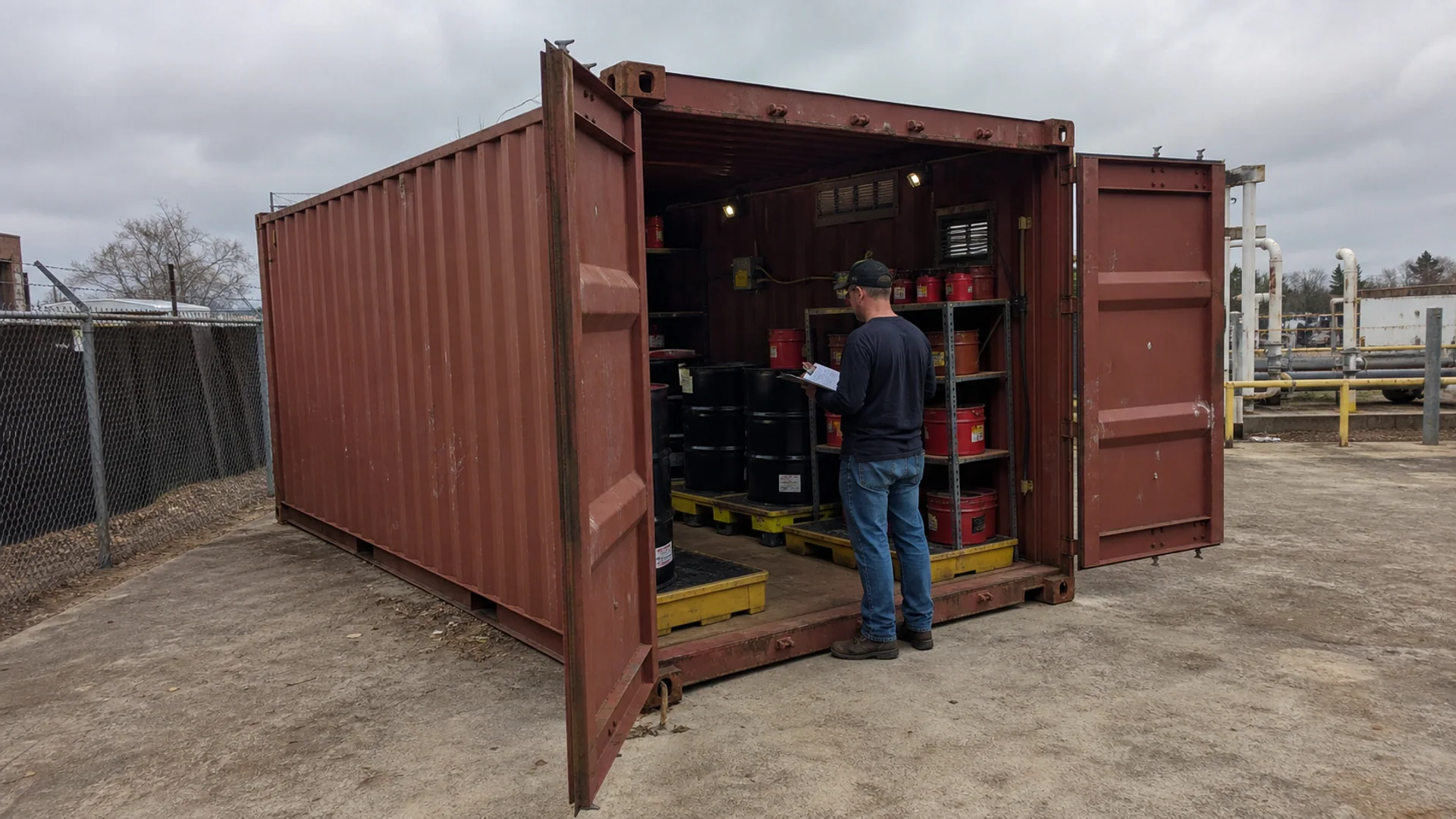 Local base unit availabilityEngineered hazmat storage containers
Match containment, ventilation, separation and access to the exact material, quantity and local requirements before fabrication. An ordinary shipping container is not automatically suitable or compliant for hazardous materials.
The goal is a documented configuration that addresses the actual hazard and local rules. No website image or checklist replaces professional engineering or authority approval.
Current safety data sheets and inventory quantities establish what may need separation, ventilation, temperature control or special construction.
Secondary containment, compatible surfaces and inspection access are evaluated around the package type and applicable spill-control requirements.
Fire, environmental, zoning, building and workplace authorities may each apply different requirements before placement or use.
Tell us the use, ZIP and required configuration. We will confirm the nearest suitable inventory or modification path before you commit.
Containment, ventilation, compatible storage, controlled access and electrical design are selected for the actual material, not copied from a generic container photo.
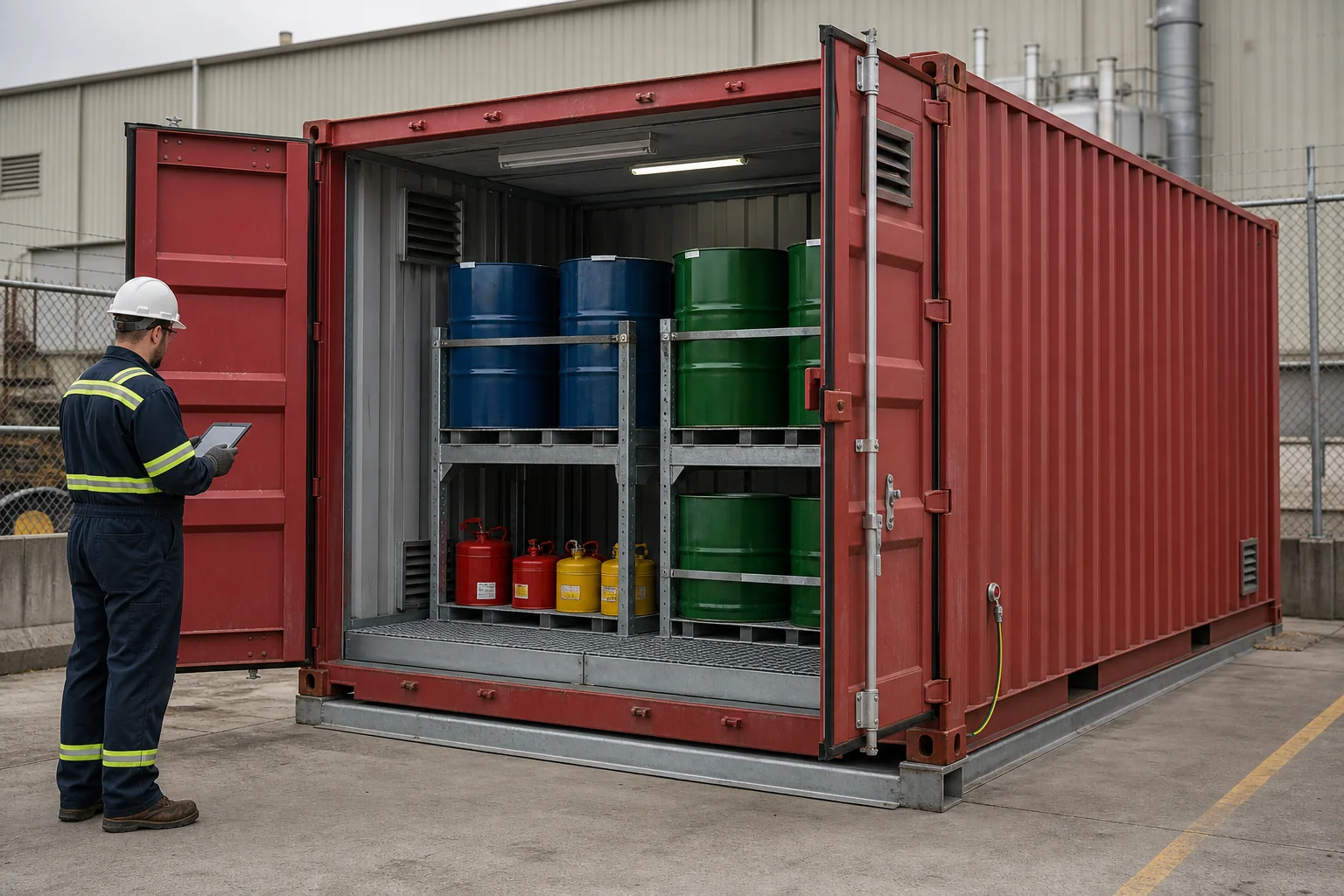
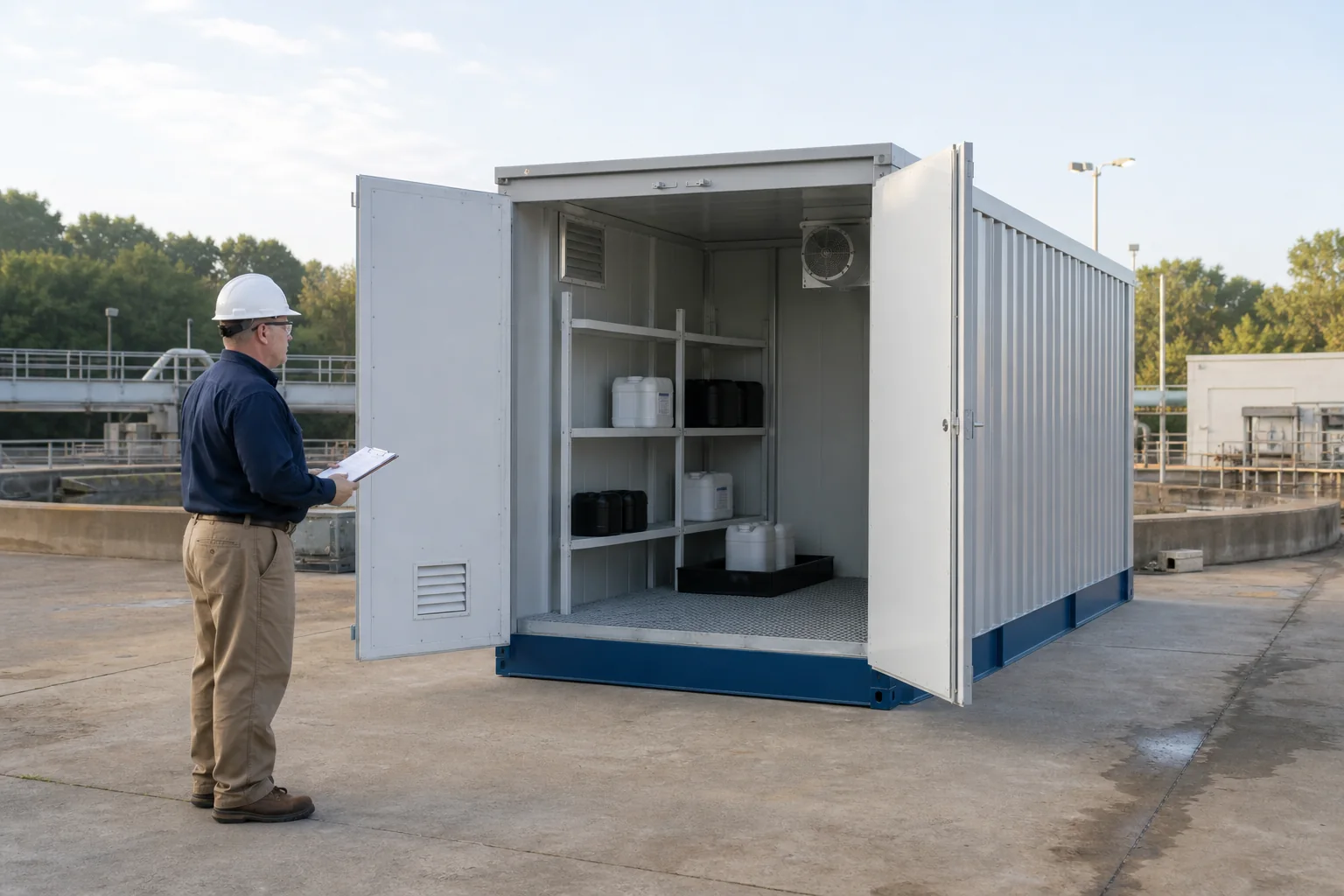
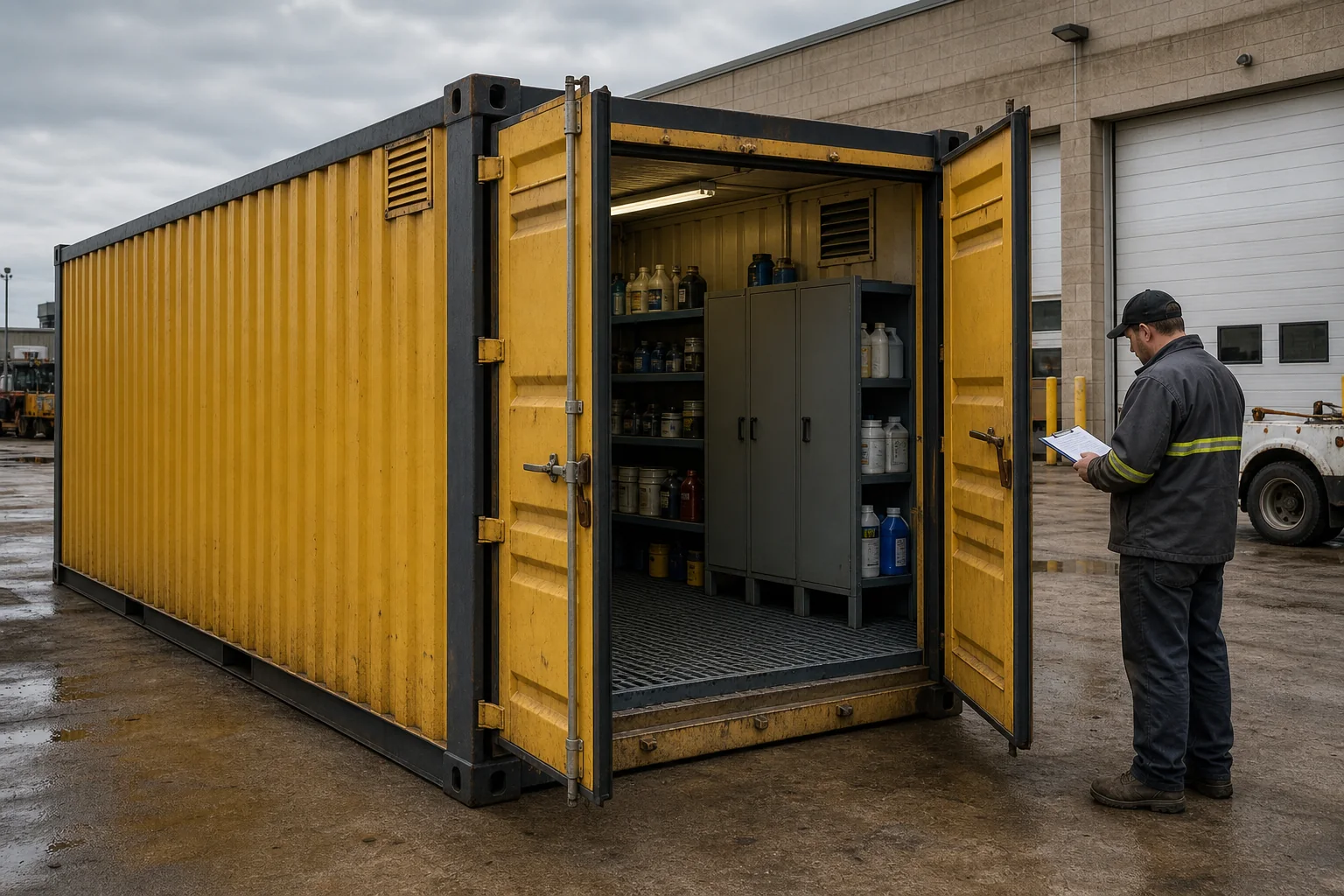

Storage only, dispensing, charging, waste accumulation and occupied work are different activities. Each can change the required ventilation, fire protection, containment, electrical and permitting approach.
Use current safety data sheets, package types, maximum quantities and incompatibilities. Product names alone are not enough.
Evaluate secondary containment, compatible construction, low and high ventilation, electrical classification, grounding, spill response, security and inspection access.
The applicable fire code official, environmental authority, building department, insurer and workplace-safety requirements must be addressed before use.
Concept diagram only. The exact material, quantity, activity, site and governing requirements determine the engineered configuration and approvals.
Provide current safety data sheets, container sizes, maximum quantities, storage duration, dispensing activity and site information so the correct requirements can be identified.
Hazard-specificScope ventilation, containment, separation, electrical classification, grounding and fire-code requirements around the exact liquids and quantities.
Get delivered priceCompatibility firstMatch compatible surfaces, shelving, containment, ventilation and segregation to the actual acids, bases or corrosive products.
Get delivered priceControlled accessOrganize approved paints, aerosols, lubricants and shop chemicals with quantity limits, separation and spill-control measures.
Get delivered price Separate assessment
Battery, oxidizer, reactive or other special hazards require a separate material-specific engineering and authority review.
Get delivered priceAvailability and final price depend on configuration, condition, local inventory and delivery ZIP.
One specialist handles the quote, inventory match and delivery details.
Do not assume so. A standard container may lack the required ventilation, containment, electrical design, separation, fire protection and approval. Suitability depends on the exact material, quantity, activity and local requirements.
Provide current safety data sheets, package type and size, maximum quantity, storage duration, whether materials will be transferred or dispensed, required temperature range, site plan and delivery ZIP.
Requirements depend on the material, quantity, activity and governing regulation. Some regulated liquid storage and hazardous-waste applications require secondary containment. The design must be confirmed for the exact use rather than assumed from a general rule.
No. Ventilation is only one possible control. Airflow rate and location, vapor density, ignition sources, electrical classification, containment, incompatibilities, fire protection, egress and site separation may also apply.
The applicable authority or authorities depend on the site and material. They may include the fire code official, environmental regulator, building department, workplace-safety authority and insurer. Approval must be confirmed before use.